INTRODUCTION
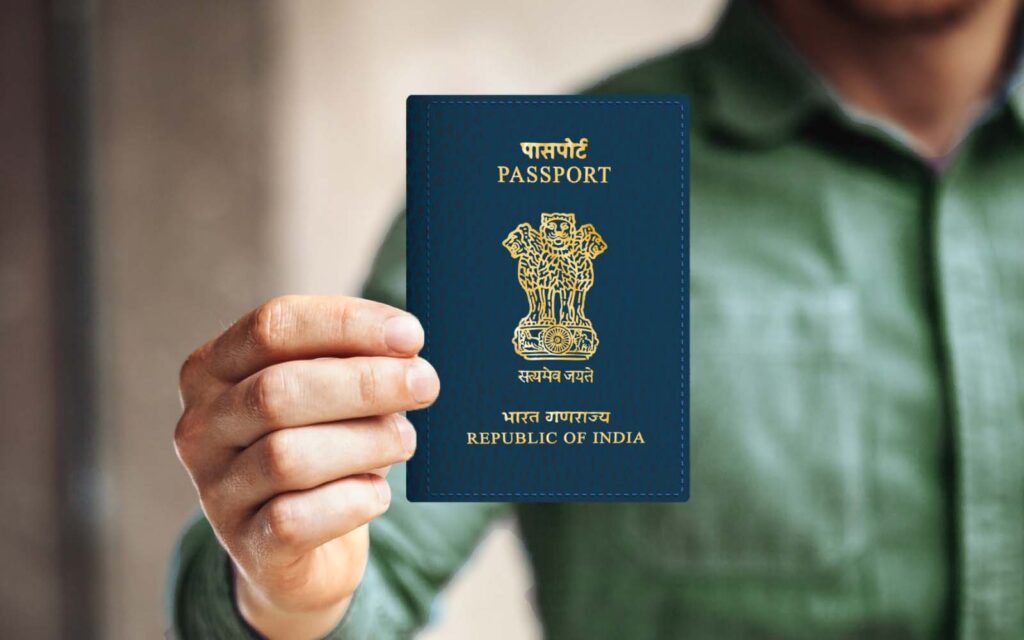
The purpose of police clearance for passports is to authenticate the person’s identity and proof of address. Typically, the police verification process for passports involves a visit from an officer of the nearest police station, who performs the process. As part of NRI Passport Verification Services, this procedure ensures that applicants—whether residing in India or abroad—meet the legal requirements for international travel documentation.
Police verification for a passport in India is the procedure of verification of the individual details, background, and credentials of the applicant. It includes the local police department conducting an inquiry to verify the applicant’s identity, address, and past record of crime. Police verification aims to verify the genuineness of the applicant’s information, evaluate their eligibility to obtain a passport, and maintain national security interests. The verification process seeks to detect possible risks, stop identity fraud, and provide assurance that only authentic individuals with the right intention are awarded the right of international travel.
HISTORICAL BACKGROUND
Evolution of Passport Controls in India
While passport verification as a concept originated in India during the colonial period, the passport verification process and its modalities began to take up the present shape after independence. The Passport Act, 1967, provided the basic legal framework governing the issue of passports in India and thus was a landmark in India’s approach towards travel documentation and citizen mobility.
Pre-Independence Era
Passport controls, during British rule, were few and mainly aimed at the movement between British territories. Also, in British times, there was hardly any need for systematic background verification as travel documents were awarded based on social standing or colonial administrative discretion.
Post-Independence Development (1947-1990s)
Since independence in 1947, the Government of India felt that effective passport controls were necessary to regulate transnational migration for national security. The Passport Act of 1967 was a milestone legislation providing orderly procedures for issuance. However, the verification by police during those times was manually done with papers and often involved delays of several months. Files had to be physically moved between passport offices and police stations. Verification reports had to be compiled manually and delivered through the conventional mailing system. This rather exhaustive system was also beset with inefficiencies, corruption, and enormous delays in processing.
Digital Revolution (2000s-present)
Passport Seva Project, which was initiated in the year 2010, marked a paradigm shift in passport services. This project by the Ministry of External Affairs, along with Tata Consultancy Services, introduced:
Ø Passport Seva Kendras:
Modernized application centers that have replaced the old passport offices.
Ø E-applications:
This reduces the need to physically submit forms.
Ø Appointment-based services
Reduce queues, thereby increasing efficiency.
Ø Digital tracking:
The applicant has the facility to track and obtain updated status regarding his or her verification in real time.
Recent Innovations: Passport Seva 2.0 and mPassport Police App
The next transformative leap came in 2025 with Passport Seva 2.0:
- Complete digitization of the verification process
- Introduction of e-passports with enhanced security features
- The mPassport police app enables police to upload verification reports directly from the applicants’ residences.
- Paperless process: reducing environmental footprint, processing
The transformation from minimal controls in the colonial era to the sophisticated digital verification system today indicates the journey of India toward administrative modernization while balancing the security imperatives with citizen convenience.
WHAT IS PASSPORT POLICE VERIFICATION?
Police verification for a passport is the process where local police officials check the applicant’s credentials, residence address, and background to validate the eligibility for a passport.
The applicant needs to descend to the police station in order to finalise the process of police verification for a passport. In certain instances, a police officer may go to the applicant at their home address in order to authenticate the information that they have given in their application.
Once verified and approved by the police, the Ministry of External Affairs of the Republic of India will only release the passports to successful applicants. There are three types of police verification for a passport, they are:
- No Police verification
- Pre-Police Verification
- Post-police Verification
POLICE VERIFICATION FOR PASSPORT RULES
There are certain guidelines that need to be abided by the passport applicant for smooth police verification for a passport.
Some of them are listed below:
- Make sure that you fill out the application properly with correct information, leaving nothing loose.
- Ensure all the documents that were needed for application purposes and any additional documents are in hand for a trouble-free police verification process.
- Be present at your home address when the police visit for verification. If you phoned down at the police station, ensure that you report on the date and time as advised by the
WHY IS POLICE VERIFICATION REQUIRED FOR PASSPORTS?
Police verification for passports is a very crucial step, as a wrong step can raise suspicion among the police officials, leading to rejection of your passport application. Read the pointers below to understand why a police verification process is significant for a passport application:
1. Identification and Address Check:
The local police check and verify the identity and residential address of the applicant.
2. Criminal History Check:
Police utilize the law enforcement database to check if there is any criminal background, history, or pending case on the applicant.
3. Prevents Misuse:
It prevents misuse by not allowing individuals to get multiple passports on different identities.
4. National Security:
Passport police verification prevents unlawful acts and protects the integrity of the country.
5. Verification for Government Records:
It keeps government records up-to-date for passport holders.
6. Mandatory Compliance:
This is a mandatory compliance specified by the Ministry of External Affairs for passport approval.
ELIGIBILITY & REQUIRED DOCUMENTS
Who can be available: There a mostly first-time applicants required.
Date of birth proof: This could be a birth certificate or your elementary or high school graduation certificate.
Address Proof: This could include your phone, electricity, or water bill. Your ration card is also valid. You can see a list of other documents that fall within this category on their official website.
Identity proofs: This includes the Aadhaar Card, PAN Card, Driver’s Licence, Voter ID Card, and LIC bonds
STEP BY STEP PROCESS
The police verification for passports takes place in two ways: online and offline. We have explained the steps in the following section for both modes in detail:
1. Offline Police Verification for Passport
Following are the steps for offline police verification:
Step 1: After you submit your passport application, the Passport Seva Kendra (PSK) will initiate the police verification process.
Step 2: The PSK sends your residential address you have given to the police station nearest to your location for authentication.
Step 3: The police station deputes an officer who will either come to your residence or request that you report to the police station along with your original documents.
Step 4: Your identity proof will be verified, your address confirmed, and you will be required to sign the verification documents.
Step 5: Upon verification, the police will send back their report to the Passport Seva Kendra.
Step 6: Once the report is favorable and your documents are free from any objections, the Ministry of External Affairs will approve and issue your passport within a few working days.
i.e. www.passportindia.gov.in .
2. Online Police Verification for Passports
You can make an online application for police verification of your passport through the Passport Seva portal or the mPassport portal.
Follow the steps given below:
Step 1: Register yourself on the official Passport Seva Portal.
Step 2: Log in to your account and choose “Apply for Passport Clearance Certificate” from the menu on the website www.delhipolice.nic.in and go to the PCC Portal.
Step 3: Enter all the details correctly in the application form and submit online.
Step 4: Head to the “View Saved/Submitted Applications” section and click on “Pay and Schedule Appointment” to pay the applicable fee and book your appointment at your nearest Passport Seva Kendra (PSK).
Step 5: Once payment is successful, click on “Print Application Receipt” — this receipt serves as proof of payment and will be needed during your appointment.
Step 6: On the date of your appointment, take all the required original documents for verification to the Passport Seva Kendra.
3. Police Verification for Passport for Minor
A child under the age of 18 years needs a passport to travel internationally. The parents or legal guardian of the candidate need to apply on their behalf for a passport. These passports are issued for a period of five years and until the age of 18.
Minors in most situations do not require a police verification process in case their parents or guardians possess a valid passport. Nevertheless, if police verification is required in those situations, these are the documents that the guardian must collect for a minor’s police verification for a passport:
- Candidate’s birth
- Proof of their address as their legal
- Proof of Indian citizenship of their legal
- Several recent passport (for parents/guardians or both)
- Extra documents are asked by the
4. Police Verification for Passport for Senior Citizen
Police verification for passport for senior citizens is under regular rules. Police verification can be exempt if applying through Tatkaal or renewal without any changes. Police verification is compulsory for fresh passport applications.
5. Passport Seva 2.0 and mPassport Police App
In 2025, the Ministry of External Affairs also initiated Passport Seva 2.0, featuring higher digitisation, paperless procedures, and e-passports. One of the key elements is the mPassport Police App, which is already operational in more than 25 states and union territories. The app enables local police to directly upload verification reports from the applicant’s residence, eliminating paperwork and slowing down procedures. 4
6. Documents Required for Police Verification for a New Passport
A passport application and approval involve submitting a list of documents. You need to update all your documents properly to increase your probability of approval. Given below is the list of documents necessary for police verification for passport:
- Identity proof, like an Aadhaar card, PAN card, Voter ID card,
- Address Proof contains Rent agreement documents, electricity bills, Gas bills,
- A photocopy of your passport application
- Several passport-size
- The authorities may seek other documents according to their
7. Documents for Passport Renewal/Re-issue
If you are wondering, is police verification necessary for passport renewal, the reply is yes. So, following is a list of documents required for the renewal or reissue of a passport:
- Old passport and copies of pages bearing ECR/Non-ECR, validity extension page and observation page.
- Updated proof of address like utility bills and ownership
- Identity Proof like Aadhaar card or PAN
- NOC (No Objection Certificate) or PI (Prior Intimation Letter)
- Any other documents if necessary for the
8. Police Verification for Passport Status Check
In response to your query, how to check police verification for passport status, the step-by-step guide on the process is as follows:
Step 1: Go to the official Passport Seva Application Status Tracker.
Step 2: Click on ‘Track Application Status’ after reaching the page.
Step 3: Fill in your Application Number and Date of Birth (DOB) in the specified fields.
Step 4: Click on ‘Track Status’ to see the latest update of your passport application. You may also verify your passport through other means like:
- Dial a toll-free number 1800 258
- Send your ‘status file number’ to 9704 100
- Passport Seva application on your mobile
9. After How Many Days is police verification done for a Passport?
The police typically take two to three weeks to finalize the police verification for passport. The time scale differs based on the extent of verification an officer conducts to meet an applicant’s genuineness and credibility.
Police verification is usually done in:
- 5–7 working days in digitized police jurisdictions (e.g., big cities)
- 10–14 days average nationally Up to 21 days in remote or rural areas The timeline can be extended if:
- Documents are incomplete
- Applicant not present at the address
- Extra background checks are required
Police verification of the passport is an important process to authenticate applicant identity and adhere to security regulations. Knowledge of the regulations, documents to be submitted, and timelines prevents delays and makes it easier to obtain passports. On a normal basis, verification takes 5–14 days, but can be longer in rural regions.
COSTS OR FEES
The passport police verification charges differ based on the type of service required. The “Fee Calculator” at the Passport Seva website enables applicants to check the exact charges. As a general rule, the Global Entry Program (GEP) will charge Rs. 500 for a background check and a Police Clearance Certificate (PCC).
All Post Office Passport Seva Kendras (POPSKs) and Passport Seva Kendras (PSKs) need online payment to book appointments. Credit/debit cards, SBI Wallet, and internet banking can be used to make the payment.
The applicant needs to carry the application to the Passport Seva Kendra and pay in cash to make an offline payment.5
PROBLEMS & SOLUTIONS
1. ADVERSE POLICE REPORT
Contact the passport office to understand the reason for the adverse report and request a re-verification after clarifying any issues, notes passport seva.
2. DOCUMENTS MISMATCHED
Double check and ensure all information in your application precisely matches your original identity, address, and DOB proofs.
3. DELAYS IN VERIFICATION
Regularly check your application status online through the Passport Seva website or the mPassport seva mobile app.
FAQs
Q1. What is the fee structure for the PCC?
Ans. For Debit/Credit Card/Net banking/UPI payment mode for PCC Charges applicable for Individual Rs. 350/- (plus bank charges applicable) and Organization Rs. 1000/- + (plus bank charges applicable).
Q2. – What is the significance of PCC No.?
Ans. The “POLICE CLEARANCE CERTIFICATE” bears a unique PCC Number of the year (PCC Number) about the information applied. This PCC No. can be used for future download and retrieval of a copy of the report.
Q3. How can I get the payment receipt?
Ans. Payment receipt with applicant Name & PCC No. will be sent to your given Email ID, else you can take a print after payment is done successfully.
Q4. What happens after I submit my information?
Ans. After submission of your information in the PCC application form. A field enquiry will be conducted and PCC will be sent on the registered Email ID within the stipulated period, and an electronically signed “POLICE CLEARANCE CERTIFICATE” will be sent on the registered applicant’s Email address after checking of Police record and verifying of details at the time of field enquiry/verification.6
Q5. What is the time period for issue of PCC for Emigration purpose and for Private jobs/Employment?
Ans. Within 07 working days for Emigration purposes and within 21 days for Employment purposes.
CONCLUSION
Passport police verification in India is a delicate balancing act between national security imperatives on one hand and citizen mobility rights on the other. As this incisive analysis indicates, the verification procedure-whether through traditional offline methods or modern digital platforms-serves several important functions: authentication of identity, prevention of fraud, updating of government records, and protection of the nation’s interests in an interdependent world. This process also plays a significant role in NRI Legal Assistance, especially for applicants requiring verified documentation for international travel.
Whether you are getting a new passport or renewing one, you should know the passport police verification process. The process is mandatory for all except some exceptions. Additionally, providing accurate information is required to obtain clearance. Once you have obtained a passport, purchase individual travel insurance for a well-planned and secure journey.
Key Takeaways
The journey from application to possession of a passport involves certain pivotal factors: the accurateness of the documents, the timeline that differs based on geographic location and verification complexity, and requirements as per different applicant categories. While verification is usually completed within 5-14 days in urban areas, but possibly extending up to 21 days in rural regions, patience and proper preparation remain essential virtues.
Introduction of technology innovations, namely the mPassport Police App and Passport Seva 2.0, promises a bright future with faster, more transparent, and less cumbersome verification. These digital solutions have already brought a change in the experience for millions of applicants in more than 25 states and union territories by reducing paperwork and eliminating unnecessary delays.
Looking Forward
The passport verification process has a good chance of being further smoothed out as India progresses on its path of digital transformation. Greater integration of artificial intelligence, blockchain technology, and advanced biometric systems can reduce processing times further while introducing more robust security protocols.
The basic principles of police verification, however, remain unchanged:
To ensure that the travel documents are issued only to genuine and verified persons, Sure at the given address during verification; and,
In fact, proactively tracking the application status through official channels. Understanding that police verification is not merely a bureaucratic procedure but a critical security measure helps applicants approach the process with appropriate seriousness and cooperation. At a time when international travel has turned crucial for education, job prospects, and personal development, the police verification of a passport stands at the gateway as a guardian to ensure that the privilege of global mobility is extended responsibly, securely, and equitably to every eligible Indian citizen. In fact, with the right knowledge and preparation,
This process would not be an obstacle but a feasible step to explore the world outside our borders.
📞 Contact: 9657500008
🌐 Website: https://justandtrueimmigration.com