
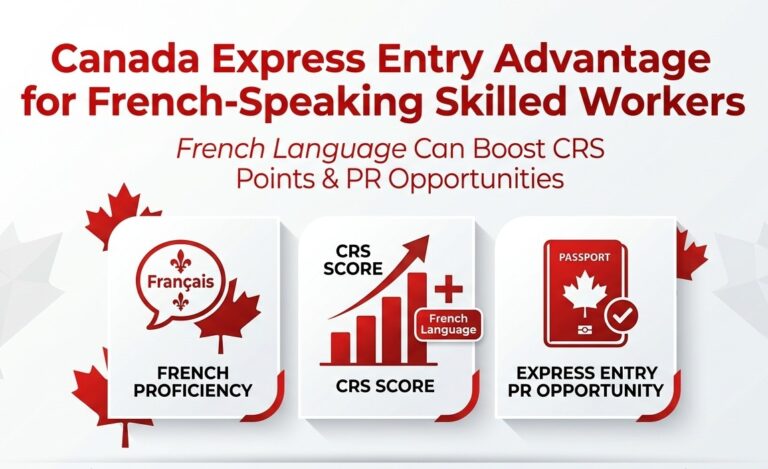
Canada continues to strengthen its immigration strategy in 2026 by giving increased priority to French-speaking skilled workers through the Express Entry system.
As Canada focuses on long-term economic growth, labour shortages, and Francophone population development outside Quebec, French language proficiency is becoming one of the strongest competitive advantages for immigration applicants.
For many skilled workers today, French is no longer simply an additional qualification — it has become a major pathway toward Canadian Permanent Residency.
One of the biggest advantages comes through the Comprehensive Ranking System (CRS). Candidates with strong French language scores can receive up to 50 additional CRS points, which can significantly improve their chances of receiving an Invitation to Apply (ITA) under Express Entry.
Applicants who achieve NCLC 7 or higher in French may receive:
✔️ 25 additional CRS points with lower English scores
✔️ Up to 50 additional CRS points when combined with strong English proficiency
In a highly competitive immigration environment where even small CRS differences can impact selection, these extra points can make a major difference.
Canada has also continued conducting dedicated category-based Express Entry draws targeting French-speaking and bilingual skilled workers. These targeted invitation rounds are part of Canada’s broader strategy to support Francophone communities, strengthen workforce diversity, and address labour shortages across multiple provinces.
For applicants, this creates additional immigration opportunities beyond traditional high CRS competition.
French-speaking candidates may benefit from:
✔️ Improved CRS competitiveness
✔️ Increased chances of receiving an ITA
✔️ Access to Francophone settlement and support services
✔️ Strong employment opportunities across Canada
✔️ Immigration pathways that support accompanying spouses and dependent family members
Applicants with bilingual abilities are now viewed very favourably within Canada’s evolving immigration system, especially when combined with skilled work experience, Canadian education, or professional expertise in high-demand sectors.
At the same time, Canada’s immigration model is becoming increasingly focused on real workforce contribution, language integration, and long-term economic participation.
This means applicants with:
✔️ Strong French proficiency
✔️ Skilled professional experience
✔️ Canadian exposure or adaptability
✔️ Strong educational backgrounds
are positioning themselves much more competitively for permanent residency pathways.
For students and skilled professionals planning for Canada in 2026, learning French is becoming more than a language skill — it is now a strategic immigration advantage that can directly improve long-term PR opportunities.