
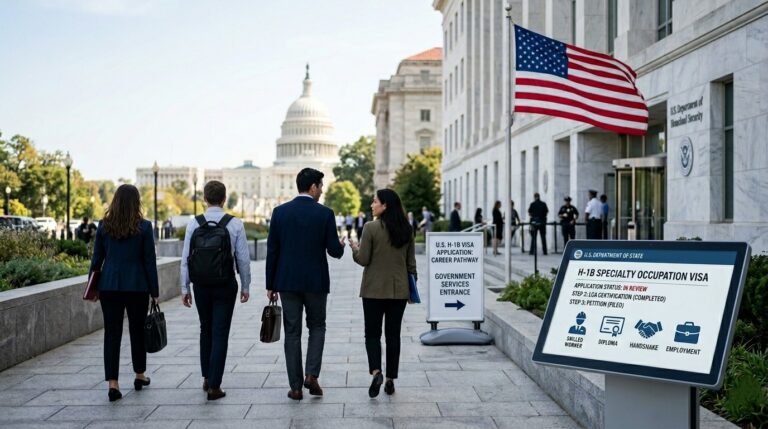
The United States remains one of the world’s most popular destinations for international students and highly skilled professionals. However, a recently discussed immigration proposal has generated significant attention across the global education and migration sector, particularly among those planning their future careers in the U.S.
While no changes have been implemented, the proposal has sparked important conversations about the future of the H-1B visa program and employment opportunities for international talent.
What Has Been Proposed?
The proposal includes several potential reforms to the current H-1B system, including:
- A possible three-year pause on new H-1B visa issuances
- A reduction in the annual H-1B cap from 65,000 to 25,000 visas
- Broader changes aimed at restructuring the skilled immigration framework
It is important to understand that these measures are currently proposals only. They have not been approved, enacted, or implemented by U.S. immigration authorities.
Why the H-1B Visa Matters
For many international students, the H-1B visa serves as a critical bridge between education and long-term professional employment in the United States.
After completing their studies, many graduates use Optional Practical Training (OPT) to gain work experience before transitioning to H-1B status through employer sponsorship. As a result, any discussion surrounding H-1B reform naturally attracts significant attention from students, universities, and employers alike.
Potential Impact on International Students
If similar reforms were ever introduced in the future, they could influence several areas of the international education landscape.
Students may face increased competition for employer-sponsored opportunities, while companies could become more selective when hiring international graduates. A reduced number of available H-1B visas could also encourage students to explore alternative destinations that offer clearer post-study work pathways.
Countries such as Canada, the United Kingdom, Australia, Germany, and New Zealand continue to attract international students through various study-to-work and permanent residence pathways.
What Skilled Professionals Should Consider
For experienced professionals, any future shift toward a more selective immigration system could place greater emphasis on:
- Advanced educational qualifications
- Specialized professional skills
- Industry demand and labour shortages
- English language proficiency
- Economic contribution and workforce needs
These trends are already visible in many immigration systems around the world, where governments are increasingly prioritising highly skilled applicants who can address labour market shortages and contribute to economic growth.
The Bigger Global Trend
The discussion surrounding H-1B reform reflects a broader global immigration trend. Many countries are moving toward more targeted, skills-focused immigration systems that prioritise workforce needs, productivity, and long-term economic value.
Rather than focusing solely on eligibility requirements, immigration authorities are increasingly assessing applicants based on their qualifications, professional experience, adaptability, and ability to contribute to the local economy.
Key Takeaway
At present, there is no change to existing H-1B regulations. International students and professionals should avoid making decisions based solely on proposed legislation or speculation.
The most effective strategy remains building a strong academic profile, developing in-demand professional skills, gaining relevant work experience, and exploring multiple immigration pathways.
As global immigration systems continue to evolve, flexibility, preparation, and long-term career planning will remain the strongest advantages for students and skilled professionals pursuing international opportunities.