
The global immigration landscape is changing faster than at any point in recent years. Governments around the world are rethinking how they manage migration, attract international talent, and address labour market shortages while maintaining sustainable immigration levels.
For students, skilled workers, and future migrants, understanding these changes has become just as important as meeting basic eligibility requirements.
The Rise of the Immigration “Yo-Yo Effect”
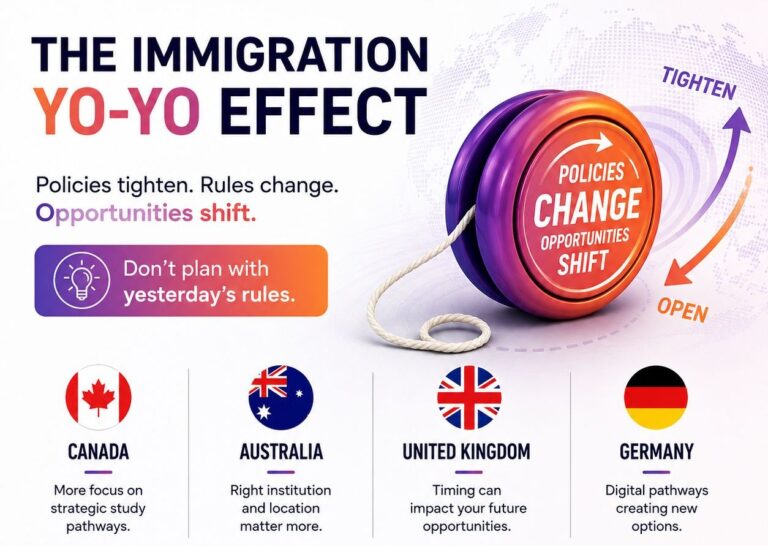
Across major immigration destinations, policies are constantly shifting. Some pathways are becoming more selective, while new opportunities are being created in sectors facing genuine skill shortages.
This trend is often described as the “Immigration Yo-Yo Effect” — a cycle where governments tighten certain immigration programs while simultaneously expanding others that better align with economic priorities.
As a result, immigration is no longer simply about choosing a country and applying. Success now depends on understanding where opportunities are growing and where requirements are becoming more competitive.
Canada: A More Targeted Approach
Canada remains one of the world’s leading destinations for international students and skilled workers. However, immigration programs are becoming increasingly focused on labour market needs, regional development, and category-based selection.
Rather than relying solely on broad immigration targets, Canada is prioritising candidates whose skills align with workforce shortages and long-term economic objectives.
Australia: Strategy Is Becoming Critical
Australia continues to welcome skilled migrants, but pathway selection has become more important than ever.
Institution choice, study location, occupation demand, English language proficiency, and state nomination opportunities are now playing a major role in determining long-term immigration success. Applicants who plan strategically often gain a significant advantage over those who simply follow popular trends.
United Kingdom: Timing Can Change Everything
The UK remains an attractive destination for international education and skilled employment. However, recent immigration reforms demonstrate how quickly policies can evolve.
Changes to student pathways, sponsorship requirements, dependant eligibility, and digital immigration systems highlight the importance of timing. Applicants who stay informed are often better positioned to take advantage of opportunities before policy shifts occur.
Germany: Expanding Opportunities for Skilled Talent
Germany continues to strengthen its position as one of Europe’s most attractive destinations for skilled professionals and international graduates.
With expanded skilled migration pathways, increasing digitalisation of immigration processes, and strong demand in sectors such as IT, engineering, healthcare, and manufacturing, Germany is creating new opportunities for qualified international talent seeking long-term career growth.
The Most Common Immigration Mistakes
Despite the availability of information, many applicants continue to make decisions based on assumptions rather than current immigration realities.
Some of the most common mistakes include:
- Following outdated immigration advice
- Copying someone else’s migration journey
- Choosing countries based solely on popularity
- Ignoring changing policy trends
- Failing to align education or work experience with market demand
What worked successfully for someone a few years ago may no longer produce the same outcome today.
The New Formula for Immigration Success
In today’s immigration environment, successful applicants are focusing on four key factors:
Right Country
Choose a destination that aligns with your qualifications, career goals, and long-term plans.
Right Course or Occupation
Select programs and professions that support labour market demand and future immigration pathways.
Right Timing
Immigration policies evolve constantly. Applying at the right time can significantly impact outcomes.
Right Strategy
A well-planned immigration journey is built on research, preparation, and realistic expectations.
Final Thoughts
Global immigration opportunities have not disappeared—they have become more strategic.
Countries are increasingly seeking individuals who can contribute to economic growth, fill workforce shortages, and integrate successfully into their societies. As a result, immigration success is becoming less about luck and more about preparation.
For students, professionals, and future migrants, staying informed and adapting to changing policies is now one of the most valuable investments you can make.
In today’s immigration landscape, smart planning is no longer an advantage—it is a necessity.