
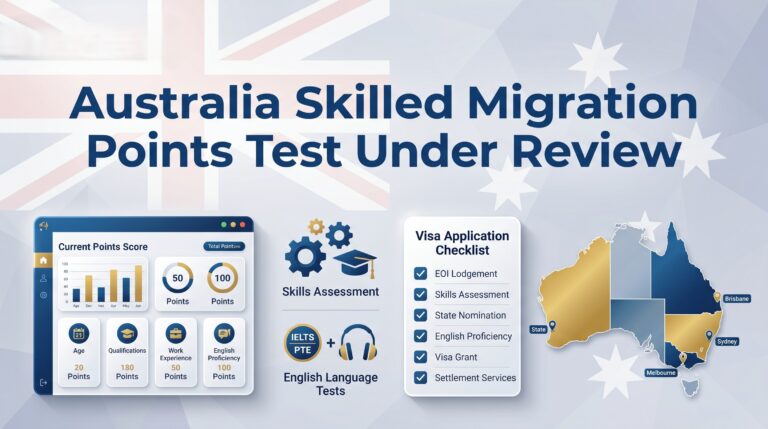
Australia remains one of the most popular destinations for skilled migrants, attracting professionals from around the world through its points-based immigration system. Recently, there has been growing discussion about potential changes to the Skilled Migration Points Test, creating questions and uncertainty for many prospective applicants.
While various proposals have been discussed, it is important to understand that no final changes have been officially implemented at this stage.
What Changes Are Being Discussed?
Australia is currently reviewing aspects of its Skilled Migration framework to ensure it continues to meet the country’s long-term workforce and economic needs.
Among the areas being considered are:
English language proficiency points
Age-based point allocations
NAATI credential points
Professional Year program points
These discussions are part of a broader review aimed at aligning migration outcomes with Australia’s future labour market demands.
Current Status: No Official Changes Yet
At present, the Australian Government has not announced any final amendments to the Skilled Migration Points Test.
Although policy discussions are ongoing, applicants should be cautious about relying on speculation or unofficial information circulating online. Immigration policies often undergo extensive review before any changes are formally introduced.
Until official announcements are made, the existing points system remains in effect.
What the Review Is Expected to Focus On
The government’s review is expected to place greater emphasis on factors that contribute to Australia’s economic growth and workforce development.
Key areas under consideration include:
Skills and Qualifications
Australia continues to prioritize applicants whose qualifications and occupations align with current and future labour shortages.
English Language Ability
Strong English proficiency remains one of the most valuable factors in skilled migration applications and may continue to play an important role in future reforms.
Relevant Work Experience
Applicants with recent, relevant, and skilled work experience are often positioned more competitively within the migration system.
Workforce and Economic Needs
Future migration policies are expected to focus increasingly on addressing genuine skill shortages and supporting Australia’s long-term economic priorities.
How Applicants Can Strengthen Their Profile Now
Rather than waiting for potential policy changes, applicants can take proactive steps to improve their competitiveness under the current system.
Improve English Test Scores
Higher English language results can significantly increase overall points and improve eligibility across multiple visa pathways.
Complete Skills Assessments
Obtaining a positive skills assessment remains one of the most important steps in the skilled migration process.
Gain Relevant Work Experience
Additional skilled employment experience can strengthen an applicant’s profile and improve overall migration prospects.
Explore State Nomination Opportunities
State and territory nomination programs continue to provide valuable pathways for skilled workers seeking Australian permanent residency.
Keep Documentation Updated
Having accurate, complete, and current documentation ensures applicants are ready to respond quickly to invitation rounds and changing opportunities.
Focus on Facts, Not Speculation
Immigration policy discussions often generate significant attention, but successful migration planning should always be based on verified information and official government announcements.
Applicants who focus on strengthening their qualifications, language ability, work experience, and overall profile will remain competitive regardless of future policy adjustments.
Final Thoughts
Australia continues to value skilled professionals who can contribute to its economy and workforce. While discussions around Skilled Migration Points Test reforms continue, no official changes have been confirmed.
For now, the most effective strategy is simple: focus on building the strongest possible profile. Strong English scores, relevant work experience, completed skills assessments, and strategic planning will continue to be key factors for migration success.
Well-prepared applicants will always be in the best position to take advantage of opportunities as Australia’s migration system evolves.