Travelling to Europe is becoming increasingly digital, with changes taking place at the region’s external borders and further developments around the Schengen Area.
For Indian travellers planning a European holiday, two developments are particularly important to understand.
The Entry/Exit System (EES) is now fully operational across the Schengen countries, changing how many non-EU visitors are recorded at the border. At the same time, Cyprus is making progress towards joining the Schengen Area, although it has not become a Schengen member yet.
Understanding the difference between these two developments is important before planning your next trip.
Europe Has Moved Away From Traditional Passport Stamping
The biggest change for many short-stay visitors is the introduction of the Entry/Exit System, or EES.
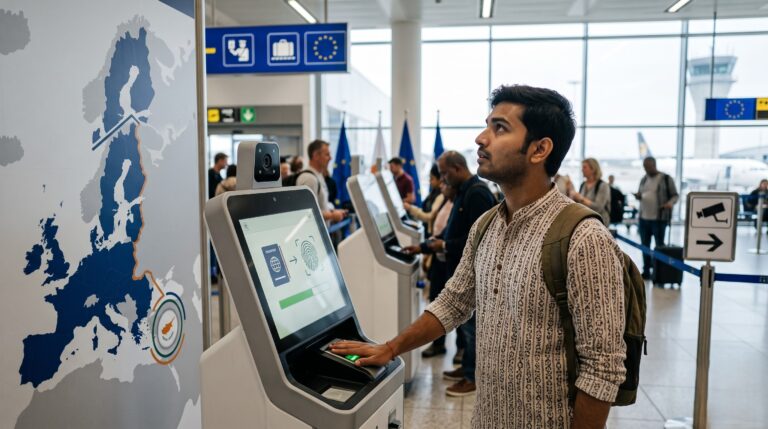
The system began its gradual rollout in October 2025 and became fully operational on 10 April 2026 at the external borders of the Schengen countries. It replaces the traditional passport-stamping process with digital records for applicable non-EU travellers.
The system records information such as:
- Travel document details
- Facial image
- Fingerprints
- Date and place of entry
- Date and place of exit
- Refusals of entry, where applicable
The EES is designed for non-EU nationals visiting for short stays of up to 90 days in any 180-day period. This includes travellers who require a short-stay visa as well as certain visa-exempt visitors.
For Indian passport holders travelling to the Schengen Area on a short-stay visa, the new border registration system is therefore particularly relevant.
What Should Travellers Expect at the Border?
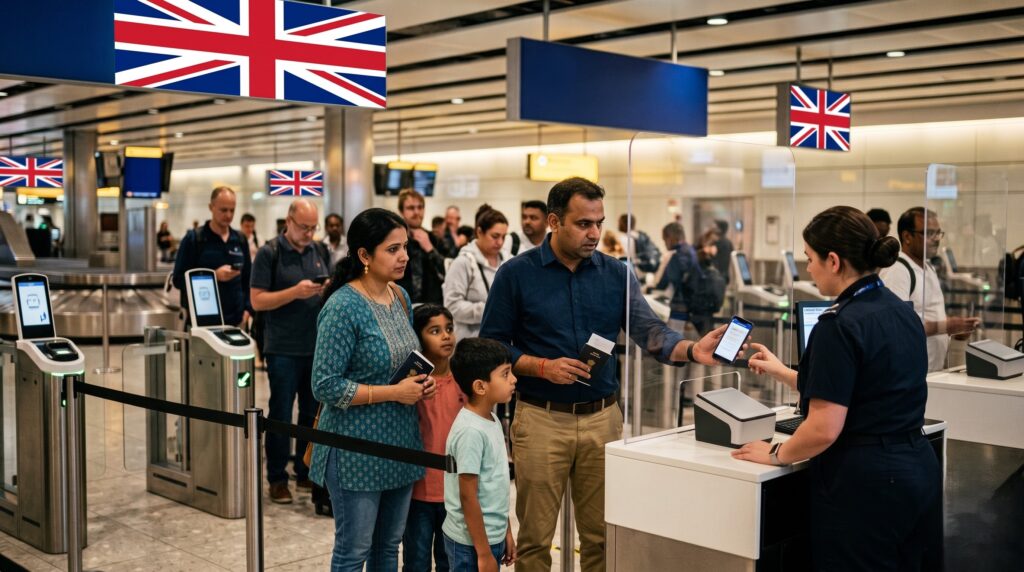
The first time an eligible traveller is registered through EES, border authorities may collect biometric information such as fingerprints and a facial image, along with the relevant travel-document information.
On subsequent crossings, the system can be used to verify the traveller’s information electronically.
The practical experience may not look exactly the same at every airport or border crossing. Although the system is fully operational, authorities and border points continue to work with the new digital procedures.
Travellers should therefore allow enough time for border formalities, particularly when travelling during busy periods.
EES Does Not Mean a New Visa
One point that can easily cause confusion is the difference between a visa requirement and the EES.
EES is a border-management system. It does not replace the Schengen visa application process for travellers who require a visa.
For an Indian traveller who needs a Schengen short-stay visa, the visa must still be obtained before travel. EES then records the applicable entry and exit information when the traveller crosses the external Schengen border.
The system also helps authorities monitor authorised periods of stay and identify potential overstays.
Not Every Traveller Is Registered in EES
The system applies to specific categories of non-EU short-stay travellers, so it is not correct to assume that every person entering Europe will go through EES registration.
For example, certain holders of long-stay visas or residence permits issued by participating countries are exempt from EES registration. There are also specific exemptions for certain family members of EU, EEA or Swiss citizens who hold the required residence documentation.
The rules can therefore depend on the traveller’s nationality, immigration status and purpose of travel.
Cyprus Is Getting Closer to Schengen — But Has Not Joined Yet
The second important development concerns Cyprus.
Cyprus has made progress towards Schengen membership, and the European Commission’s assessment has found positive progress in the country’s technical preparedness.
The Commission’s 2025–2026 Schengen Country Report followed a monitoring process that assessed Cyprus’s preparedness and identified substantial progress towards meeting the relevant requirements.
However, this does not mean that Cyprus is already part of the Schengen Area.
The accession process still requires the necessary Council decision. As of now, there is no confirmed date for Cyprus becoming a Schengen member. The European Commission has continued to support Cyprus as it works towards meeting the requirements for full accession.
What Does This Mean for Indian Travellers?
For Indian travellers, the distinction between EES and Cyprus’s Schengen process is important.
If you are travelling to a Schengen country for a short stay, you should prepare for the applicable EES border procedures.
If you are travelling to Cyprus, you should not assume that the country has already become part of Schengen simply because its accession process is progressing.
Your visa and entry requirements should be checked according to your destination, travel dates and individual circumstances.
In other words:
EES — already operational
Cyprus Schengen accession — still in progress
These are two separate developments.
Why Travel Planning Needs More Attention Now
European travel is becoming increasingly digital, but that does not mean that traditional travel documents are no longer important.
Before travelling, visitors should check:
- Whether they need a Schengen visa
- Whether their visa is valid for the countries they plan to visit
- The permitted duration of stay
- Their passport validity
- The applicable EES procedures
- Whether their destination is currently part of the Schengen Area
- Any country-specific entry requirements
This is particularly important for travellers planning multi-country European itineraries.
A country being geographically located in Europe does not automatically mean that it is part of the Schengen Area.
A Final Word for Travellers
Europe’s border system is going through a significant digital transition.
The Entry/Exit System is already fully operational, meaning eligible non-EU short-stay travellers are now subject to digital recording of their travel and biometric information at the relevant external Schengen borders.
At the same time, Cyprus is moving forward with its Schengen accession process, but it has not yet joined the Schengen Area.
For Indian travellers, the safest approach is to check the rules that apply to the specific country and date of travel, rather than relying on a general assumption that the same visa or border procedure applies across Europe.