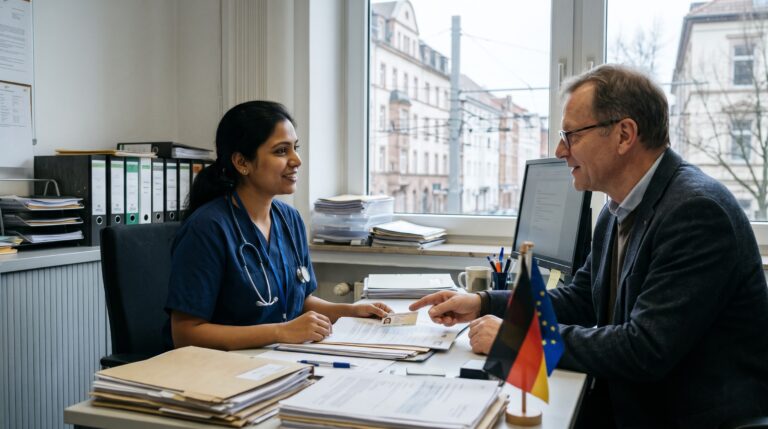
Germany is introducing additional provisions from 1 November 2026 under legislation designed to accelerate the recognition of foreign healthcare qualifications. The changes aim to simplify parts of the recognition process, reduce administrative delays and help address ongoing staffing shortages in Germany’s healthcare sector.
This development could be particularly relevant for internationally trained medical professionals, including Indian healthcare workers who are considering employment and long-term professional opportunities in Germany.
🏥 Which Healthcare Professionals May Benefit?
The updated provisions are particularly relevant to foreign-trained professionals in the following occupations:
Doctors: Medical professionals seeking recognition of their overseas medical qualifications.
Dentists: Foreign-trained dental professionals planning to pursue professional opportunities in Germany.
Pharmacists: Qualified professionals interested in working within Germany’s pharmaceutical and healthcare sector.
Midwives: Internationally trained midwives seeking recognition of their professional qualifications.
The objective is to make the qualification-recognition process more efficient and improve access to skilled healthcare professionals.
🇮🇳 Potential Benefits for Indian Healthcare Professionals
Faster recognition procedures may help eligible applicants:
Reduce delays associated with qualification-recognition procedures.
Move more efficiently through the professional assessment process.
Plan their employment opportunities and career transition to Germany.
Explore opportunities within Germany’s healthcare sector, where qualified professionals are in demand.
This could be an important development for Indian healthcare professionals who have been considering Germany as a destination for international employment.
📋 Does Faster Recognition Mean Automatic Permission to Work?
No. Faster qualification recognition does not automatically grant professional authorisation or permission to practise in Germany.
Applicants must still satisfy the applicable requirements, which may include:
Assessment and recognition of professional qualifications.
Required German-language proficiency.
Professional registration or authorisation, where applicable.
Relevant employment and immigration requirements.
Therefore, healthcare professionals should understand the distinction between having their qualifications recognised and receiving permission to practise their profession in Germany.
🌍 What About Other Skilled Workers?
Germany’s existing skilled-migration pathways, including relevant employment routes and the EU Blue Card, remain available to eligible applicants.
The reported healthcare recognition provisions should not be confused with a new general Skilled Immigration Act or a separate EU Blue Card reform. No such general change is established in this update.
📢 Planning to Work in Germany?
The introduction of faster recognition provisions could be an important development for Indian healthcare professionals seeking international career opportunities.
Doctors, dentists, pharmacists and midwives interested in Germany may wish to explore how their qualifications, professional experience and language skills align with the country’s recognition and employment requirements.
Follow Just & True Immigration News for further updates on Germany’s immigration policies, healthcare employment opportunities, skilled-worker visas and international career pathways.
🇩🇪 GERMANY IMMIGRATION PROFILE ASSESSMENT
If you are considering study, employer sponsorship or skilled migration to Germany, your occupation, experience, visa pathway, location and family circumstances can all affect the available options.
Just & True Immigration Law & Services
Immigration Lawyers | Legal Guidance | Profile Evaluation
📞 +91 96575 00008
🌐 www.justandtrueimmigration.com