
For years, Canada’s Student Direct Stream (SDS) was viewed as one of the fastest and most popular pathways for international students seeking a Canadian study permit. With SDS now discontinued, many students are asking the same question: What happens next?
The reality is that the end of SDS is only part of a much larger shift taking place within Canada’s international education system.
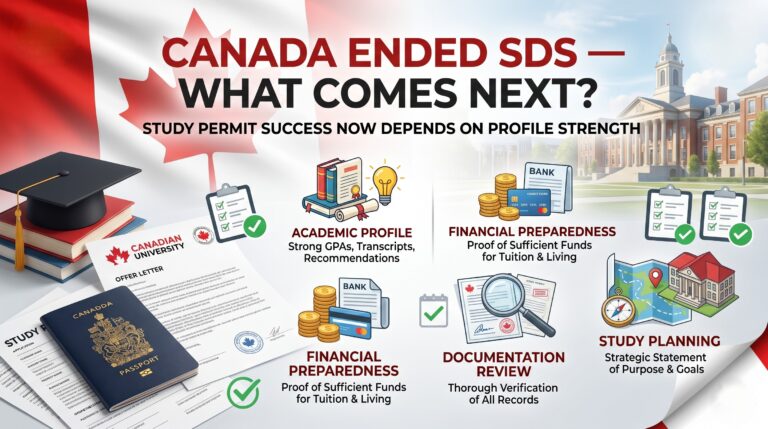
Rather than focusing on fast-track processing streams, immigration authorities are placing greater emphasis on the overall quality, credibility, and preparedness of each study permit application. The spotlight is no longer on which stream you apply through—it’s on how strong your profile is as a student.
A More Comprehensive Assessment Process
In today’s environment, visa decisions are increasingly based on the complete picture presented by an applicant.
This means students must pay closer attention to several critical areas, including:
- Selecting the right institution and academic program
- Demonstrating a logical educational progression
- Providing complete and accurate supporting documents
- Showing genuine intentions to study in Canada
- Maintaining strong financial transparency and preparedness
A study permit application is no longer simply about receiving an admission letter. Immigration officers want to understand why a particular course has been chosen, how it aligns with previous education or work experience, and how it supports future career goals.
What Immigration Authorities Are Looking For
As Canada’s approach becomes more structured, several factors are receiving increased attention during the assessment process.
Students should be prepared to demonstrate:
A Clear Study Pathway
The chosen course should make sense based on the applicant’s academic background, work experience, and long-term objectives.
Consistency Across the Application
Information provided in academic records, financial documents, employment history, and personal statements should align and support a clear narrative.
Strong Supporting Evidence
Documentation must be complete, genuine, and capable of supporting every claim made within the application.
Genuine Temporary Resident Intent
Applicants must satisfy immigration authorities that they understand the temporary nature of a study permit and have a legitimate educational purpose for coming to Canada.
Financial Readiness
Students should be able to clearly demonstrate their ability to pay tuition fees, living expenses, and other costs associated with studying in Canada.
The Mistake Many Students Still Make
One of the most common misconceptions is believing that securing admission from a Canadian institution automatically leads to visa approval.
Admission and visa approval are two separate processes.
A university or college evaluates academic eligibility. Immigration authorities assess whether the applicant meets Canada’s study permit requirements.
As a result, even students with strong admission offers may face challenges if their documentation, financial evidence, or study plans are not presented effectively.
Canada Remains a Leading Study Destination
Despite these changes, Canada continues to be one of the world’s most attractive destinations for international education.
Its globally recognized institutions, multicultural environment, post-graduation opportunities, and potential immigration pathways continue to attract students from around the world.
What has changed is not the opportunity itself—but the level of preparation required to access it successfully.
Final Thoughts
The end of SDS does not mean Canada is closing its doors to international students. Instead, it signals a move toward a more structured and evidence-based assessment process.
Students who invest time in building a strong academic profile, preparing accurate documentation, demonstrating financial readiness, and presenting a clear study plan will continue to be well-positioned for success.
Canada remains a land of opportunity for genuine students. The difference in 2026 and beyond is that preparation, credibility, and strategic planning matter more than ever before.
Is Canada becoming more selective, or simply more structured?
For many future students, the answer is likely both.