
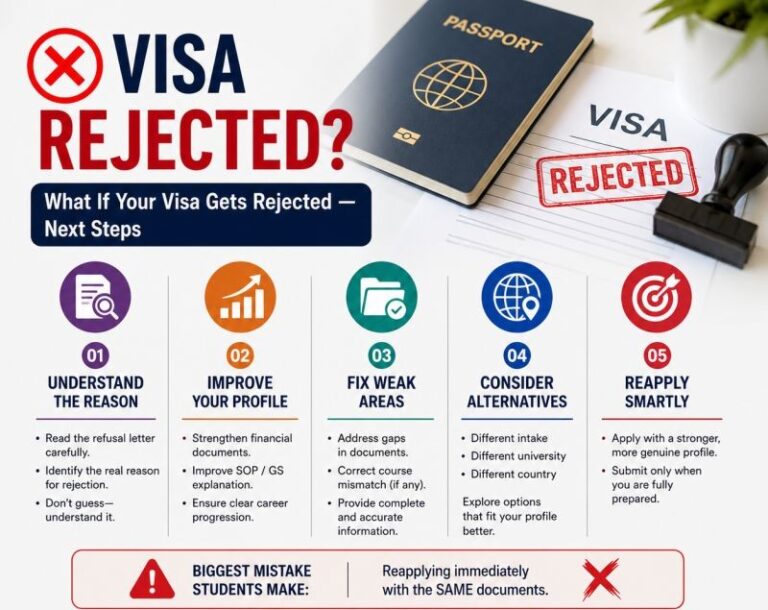
A visa refusal can feel disappointing, stressful, and emotionally overwhelming — especially after months of preparation, financial planning, and future expectations.
However, from a legal and immigration perspective, a refusal does not always mean the end of your journey. In many cases, it simply means the visa officer was not fully satisfied with certain parts of the application based on the evidence provided at the time of assessment.
What matters most after a refusal is not panic or urgency — it is strategy, analysis, and correction.
A Visa Refusal Is Not Always Permanent
One of the biggest misconceptions applicants have is believing that a refusal automatically destroys all future immigration chances.
In reality, a refusal does not necessarily mean:
- You are permanently ineligible
- Your profile has no value
- You cannot apply again successfully
- Your future immigration opportunities are over
A refusal is often an indication that the application failed to meet specific legal, financial, academic, or credibility requirements during assessment.
The real focus should be understanding exactly why the refusal happened.
Common Reasons Behind Visa Refusals in 2026
Immigration systems worldwide are becoming more compliance-focused and evidence-driven. Visa officers now examine applications more carefully for consistency, intent, financial capability, and long-term credibility.
Some of the most common refusal reasons include:
Weak or Inconsistent Financial Evidence
Insufficient funds, unclear transactions, unexplained deposits, or inconsistent financial documents often create credibility concerns.
Visa officers want to see genuine financial capacity — not temporary or unsupported arrangements.
SOP or Genuine Student Concerns
A poorly written Statement of Purpose (SOP) or weak Genuine Student explanation can significantly affect student visa outcomes.
Applications lacking clear academic goals, career direction, or logical study plans may appear non-genuine.
Poor Course or Career Alignment
Choosing a course unrelated to previous education or work experience without proper explanation can raise concerns about the applicant’s real intentions.
Strong course progression and career logic are now critical.
Incomplete or Contradictory Documentation
Missing documents, inconsistent information, incorrect forms, or conflicting statements can weaken the overall application.
Even small inconsistencies may impact credibility assessments.
Weak Future Planning
Many refusals occur because applicants fail to clearly explain:
- Career goals
- Future opportunities
- Return plans (where required)
- Long-term professional relevance of the chosen pathway
The Biggest Mistake After Refusal
One of the most common and costly mistakes is reapplying immediately with exactly the same documents, explanations, and strategy.
This often results in another refusal because the original concern remains unresolved.
Immigration officers compare previous applications carefully. If nothing meaningful has changed, the outcome often remains the same.
What You Should Do Before Reapplying
A strong reapplication should focus on solving the refusal concerns directly — not simply submitting the application again.
Important areas to improve include:
Stronger Financial Presentation
Organize financial documents properly, explain fund sources clearly, and remove inconsistencies wherever possible.
Better SOP or Genuine Student Strategy
Your SOP should present a clear academic and career narrative supported by logic, progression, and future planning.
Improved Career Alignment
Course selection, university choice, and future goals should work together as one consistent profile.
Detailed Documentation Review
Every document should be checked carefully for accuracy, consistency, and completeness before resubmission.
Directly Addressing Refusal Concerns
A successful reapplication usually explains how previous concerns have now been resolved with stronger evidence and clearer explanations.
Sometimes a Different Strategy Is Smarter
In some situations, the best solution may not be immediate reapplication.
A stronger long-term strategy could involve:
- Applying for a later intake
- Choosing a stronger institution
- Improving language scores
- Gaining work experience
- Selecting a more suitable immigration pathway
- Considering another country with better profile alignment
Strategic adjustments often create better outcomes than rushed decisions.
Final Legal Insight
A visa refusal is not always a dead end — but a poorly planned reapplication can become one.
Immigration systems in 2026 are highly evidence-based, risk-focused, and credibility-driven. Success now depends on preparation, consistency, transparency, and proper strategy.
Applicants who carefully reassess their profile, strengthen weak areas, and address refusal concerns directly often achieve far better outcomes in future applications.
The key is not reacting emotionally to a refusal — but responding strategically to it.