
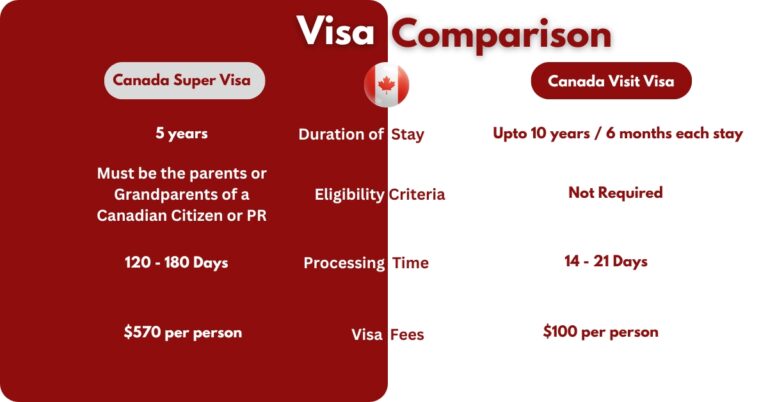
Canada is making a meaningful change to the Super Visa program from March 31, 2026, and it is one that many families have been waiting for. The update focuses on how the income requirement is calculated, making it easier for children and grandchildren in Canada to qualify when inviting their parents or grandparents for a long stay. IRCC says the changes are meant to make the program more equitable and accessible, while keeping the core benefits of the Super Visa in place.
For families who rely on the Super Visa as a practical alternative to permanent sponsorship intake limits, this is a big development. The Super Visa remains one of Canada’s most important family-reunification pathways because it allows parents and grandparents to stay in Canada for extended periods without needing permanent residence right away. What is changing in 2026 is not the long-stay benefit itself, but the financial doorway into the program.
What is changing from March 31, 2026
The main update is simple but powerful. For new Super Visa applications filed on or after March 31, 2026, the income assessment will no longer be limited to only the most recent tax year. Instead, hosts will be able to show income from either of the last 2 tax years. This gives sponsors more flexibility, especially if one recent year was unusually weak because of job changes, reduced hours, business fluctuations, or temporary financial setbacks.
The second major change is that the visiting parent or grandparent will now be able to add their income to the host’s income to help meet the minimum necessary income requirement, often referred to as LICO. This is a notable shift because it recognizes that many visiting parents and grandparents also have stable financial resources of their own, even if the child or grandchild in Canada does not fully meet the threshold alone.
Taken together, these two changes make the program easier to access without changing its purpose. Families who were previously close to the income line but could not quite qualify may now have a realistic chance of approval under the revised framework. That is why this 2026 update matters so much in practical terms.
Why this update matters for families
In real life, income is not always perfectly steady from one year to the next. A sponsor may have had a strong tax year two years ago, followed by a weaker recent year because of maternity leave, changing jobs, commission-based work, self-employment cycles, or broader economic factors. Under the previous approach, that recent lower year could create a barrier even when the family’s overall finances were otherwise sound. By allowing either of the last 2 tax years to be used, Canada is introducing a more realistic way to assess financial ability.
The option to combine the parent’s or grandparent’s income with the sponsor’s income also reflects the financial reality of many families. Some parents or grandparents receive pensions, rental income, retirement savings income, or other lawful income streams. Before this change, that extra support had less value in meeting the formal threshold. From March 31, 2026, that financial strength can count toward eligibility, which should open the door for more genuine family cases.
This is why the update is being seen as a strong family-reunification measure. It does not remove financial safeguards, but it makes the assessment more flexible and more aligned with how families actually support each other.
What stays the same in the Super Visa program
Even with these income changes, the most attractive features of the Super Visa remain unchanged. Parents and grandparents can still stay in Canada for up to 5 years per entry, which continues to make this visa one of the most generous long-stay visitor options in Canadian immigration. That five-year authorized stay per entry has been in place since the earlier expansion of the program and remains a central reason families choose this route.
The Super Visa also remains a multi-entry visa valid for up to 10 years. That means approved applicants can travel to Canada multiple times during the validity period without having to start a completely new application every time, subject to passport validity and border officer decisions at entry. This long validity continues to make the program especially valuable for families that want ongoing visits rather than a one-time trip.
Another key requirement that stays in place is private medical insurance for at least 1 year. IRCC continues to require proof of paid medical insurance coverage, and the department allows coverage from a Canadian insurer or an approved foreign insurance company. This requirement remains one of the most important parts of the application because it is tied directly to the applicant’s eligibility.
So while the financial calculation is becoming easier to meet, the Super Visa is still very much a structured program with clear conditions. The government has improved access, but it has not turned the pathway into an automatic approval stream.
Who may benefit most from the 2026 changes
The families most likely to benefit are those who were financially credible but blocked by technical limits in the old rules. One obvious group is sponsors whose most recent tax year was weaker than the year before. Under the new approach, they can rely on the stronger of the last two years instead of being locked into the most recent one.
Another group includes families where the parent or grandparent has their own dependable income source. This could include pension income, investment income, or other legally provable support. In those cases, the new rule allowing the visitor’s income to supplement the host’s income may make the difference between refusal and eligibility.
It may also help families recovering from temporary financial disruption. A sponsor who changed jobs, took leave, or had a short-term downturn may still be in a strong overall position. Canada’s new method seems designed to account for that kind of ordinary fluctuation rather than punishing it too heavily. This is an inference based on the structure of the change and IRCC’s statement that the new calculation is intended to improve accessibility and equity.
A practical reminder for new applicants
These changes apply only to new applications filed on or after March 31, 2026. Families preparing a Super Visa application should pay close attention to the filing date and the supporting documents they include. Since IRCC will still review the application for completeness and may request additional information, it remains important to prepare the file carefully rather than assuming the new rules alone will solve every issue.
Applicants should also remember that the Super Visa is still a temporary resident pathway for parents and grandparents, even though it offers extended stays. Officers may continue to assess eligibility based on the full application package, including documents, insurance, and the credibility of the visit. Incomplete applications can still run into problems.
Super Visa vs. parents and grandparents sponsorship
It is also important not to confuse the Super Visa with the permanent Parents and Grandparents Program. They are different pathways with different rules. The permanent sponsorship stream has its own intake process and income requirements, including multi-year proof of income in many cases. The 2026 Super Visa update discussed here is specifically about the temporary Super Visa route for parents and grandparents, not the permanent sponsorship program.
That distinction matters because many families mix the two up. The Super Visa is often the more immediate option for long visits and family time in Canada, while permanent sponsorship depends on separate invitations, quotas, and longer-term eligibility rules.
Final thoughts
The March 31, 2026 Super Visa update is one of the more practical family-reunification changes Canada has made recently. By allowing hosts to use either of the last 2 tax years and by letting the visiting parent or grandparent supplement the host’s income, IRCC is making the program easier for genuine families to access without removing its basic safeguards.
Just as importantly, the features families already value most are staying in place: up to 5 years per entry, multi-entry validity for up to 10 years, and the continued requirement for 1 year of private medical insurance from a Canadian insurer or approved foreign company. For many households, that means the Super Visa remains a strong option, and from the end of March 2026, it becomes a more flexible one too.
For parents, grandparents, and sponsors planning ahead, the message is pretty encouraging: Canada is keeping the long-stay benefits, but making the financial rules more realistic. And honestly, that is exactly the kind of update family-based temporary immigration programs need.