Travellers heading to Singapore should be aware of an important update to the SG Arrival Card (SGAC) submission process.
Singapore’s Immigration & Checkpoints Authority (ICA) has introduced an enhanced SG Arrival Card experience through the MyICA mobile application. The updated system becomes available from 30 September 2026, giving travellers another way to complete their arrival declaration before entering Singapore.
The SG Arrival Card remains an important pre-arrival requirement for most travellers entering Singapore, and the updated process is particularly relevant for visitors, students, work-pass holders and their accompanying family members.
What is changing with the SG Arrival Card?
The enhanced SG Arrival Card is now available directly through the MyICA mobile app.
Travellers are encouraged to ensure that they are using the latest version of the application before making their submission.
An outdated version may affect the ability to:
- Submit the SG Arrival Card
- Generate the required QR code
- Use the QR code at automated lanes at Singapore’s land checkpoints
The change is therefore mainly about how travellers complete and manage their SG Arrival Card submission, rather than introducing a new visa or immigration category.
Who needs to submit the SG Arrival Card?
The SG Arrival Card is required for most travellers entering Singapore.
This includes many:
- Tourists and short-term visitors
- Indian passport holders travelling to Singapore
- International students
- Work-pass holders
- Family members and dependants travelling with eligible pass holders
There are limited exceptions under Singapore’s border procedures, including certain Singapore citizens, permanent residents and long-term pass holders entering through the Woodlands and Tuas land checkpoints.
Travellers should check the applicable ICA requirements based on their nationality, immigration status and method of entry.
When can you submit the SG Arrival Card?
Travellers can submit the SG Arrival Card within three days before their intended arrival in Singapore.
This means that travellers should not complete the declaration too far in advance.
For example, if you are arriving in Singapore on a Friday, the submission window opens three days before your arrival.
Travellers should make sure the information submitted is accurate and corresponds with their travel document and intended journey.
What about the SG Arrival Card QR code?
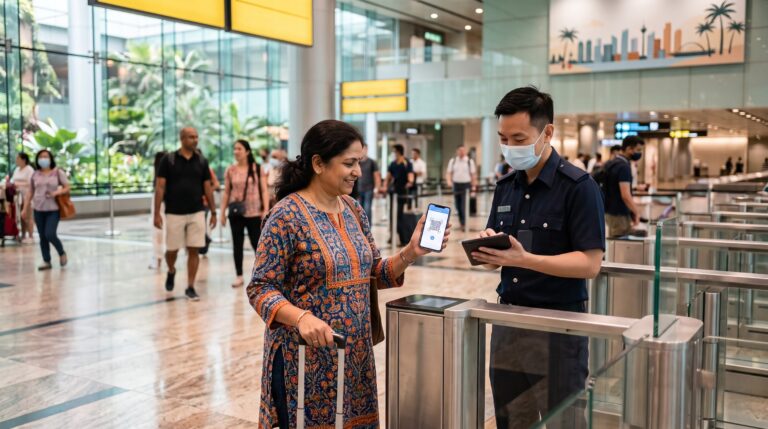
The SG Arrival Card process can generate a QR code that may be used at eligible automated clearance lanes.
This makes keeping the MyICA application updated particularly important for travellers who intend to use automated clearance facilities.
Travellers should complete the submission before arriving at the checkpoint and ensure that the QR code is readily accessible when required.
Do Indian travellers need to take any additional action?
Indian travellers visiting Singapore should be aware that the SG Arrival Card is separate from the Singapore visa requirement.
Where a traveller requires a Singapore entry visa, the visa requirement continues to apply.
Completing the SG Arrival Card does not:
- Replace a Singapore visa
- Guarantee entry into Singapore
- Replace immigration clearance
- Grant permission to stay beyond the authorised period
The SG Arrival Card is an arrival declaration that forms part of Singapore’s border-control process.
Students and work-pass holders should also take note
The updated SG Arrival Card process is not limited to tourists.
International students, work-pass holders and accompanying family members may also need to complete the declaration when entering Singapore, subject to the applicable exemptions.
This is particularly relevant for people travelling in and out of Singapore during their studies or employment.
Keeping the MyICA app updated can help avoid technical issues when completing a new SG Arrival Card submission.
What travellers should do before flying to Singapore
Before travelling, passengers should:
- Check that the MyICA mobile application is updated.
- Submit the SG Arrival Card within the permitted three-day period.
- Ensure that passport and travel information is entered correctly.
- Generate and retain the SG Arrival Card QR code where applicable.
- Check whether a Singapore visa is required for their nationality.
- Carry the relevant passport, visa and immigration documents.
- Follow the latest ICA instructions at the point of entry.
Travellers using Singapore’s land checkpoints should pay particular attention to the updated app and QR-code requirements if they intend to use automated lanes.
Is the SG Arrival Card a new visa requirement?
No.
The update concerns the SG Arrival Card submission process, not the introduction of a new Singapore visa.
Travellers should continue to distinguish between:
Singapore visa — required for nationals who fall under Singapore’s visa requirements.
SG Arrival Card — an electronic arrival declaration required for most travellers, subject to specified exemptions.
Immigration clearance — the final border-control process conducted by Singapore authorities upon arrival.
Each serves a different purpose.
The key takeaway
Singapore’s enhanced SG Arrival Card is becoming available through the MyICA mobile application from 30 September 2026.
For travellers, the practical step is straightforward: update the MyICA app before making the next SG Arrival Card submission and complete the declaration within three days before arrival.
The update is relevant not only to tourists but also to Indian visitors, international students, work-pass holders and eligible accompanying family members.
Travellers should continue to check the latest ICA requirements before departure because Singapore’s entry and border procedures can vary depending on nationality, immigration status and checkpoint.