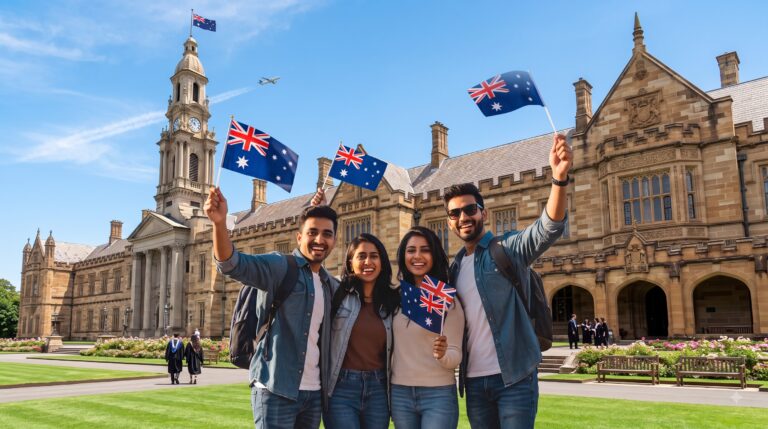
Australia continues to be one of the most popular destinations for international students, offering globally recognised universities, vocational education providers and diverse study pathways. For most international students planning to undertake full-time education in Australia, the Student Visa (Subclass 500) is the primary visa pathway.
However, obtaining an Australian student visa is not simply about securing admission to an Australian institution. Applicants must satisfy several immigration requirements, including the Genuine Student (GS) requirement, financial capacity, English-language requirements, health insurance and documentary requirements.
If you are planning to study in Australia in 2026, understanding the latest Australia Student Visa requirements can help you prepare a more accurate and complete application.
What Is the Australia Student Visa Subclass 500?
The Student Visa Subclass 500 allows eligible international students to participate in an approved course of study in Australia. The visa can generally cover the duration of the student’s course, subject to the applicable visa and enrolment conditions.
Students may also be permitted to travel in and out of Australia while their visa remains valid and, subject to visa conditions, undertake employment during their studies.
The key requirements can vary depending on the applicant’s circumstances, education provider, course and previous immigration history.
Key Australia Student Visa Requirements in 2026
1. Confirmation of Enrolment (CoE)
A valid Confirmation of Enrolment (CoE) is an important requirement for a Student Visa Subclass 500 application.
The CoE is issued by an Australian education provider after the student has been accepted and enrolled in the relevant course. Applicants must provide the required CoE information as part of their visa application.
For packaged courses, applicants may need to provide a CoE for each course in the package.
Tip: Make sure the course details in your visa application are consistent with your CoE and other supporting documents.
2. Genuine Student (GS) Requirement
The Genuine Student (GS) requirement is one of the most important parts of the Australian student visa assessment.
The GS requirement applies to Student Visa applications lodged from 23 March 2024 onwards. Applicants must demonstrate that they are genuine students and understand that studying in Australia is the primary reason for applying for the visa.
The online application asks questions covering areas such as:
- Your current circumstances
- Your family, community and economic ties
- Why you selected the particular course
- Why you selected the Australian education provider
- Your understanding of studying and living in Australia
- How the proposed course will benefit your future
- Any other relevant information
Each GS response has a 150-word limit, and responses must be provided in English. Applicants are also expected to provide supporting evidence where relevant.
Why Is the GS Requirement Important?
A strong GS response should be supported by your actual circumstances and documentary evidence.
For example, your proposed course should make sense when considered against your previous education, experience and future plans. The Department may consider your previous study, immigration history, circumstances in your home country, knowledge of the proposed course and provider, and the future value of the qualification.
Simply stating that Australia offers better opportunities may not be enough. Your explanation should be specific, credible and supported by evidence.
3. Financial Capacity for an Australian Student Visa
Applicants may need to demonstrate that they have sufficient funds to support their stay in Australia.
The financial-capacity requirement can include funds for:
- Tuition fees
- Living expenses
- Travel costs
- Schooling costs for eligible accompanying children
- Living and other relevant expenses for accompanying family members
For 2026, the Department of Home Affairs lists the annual living-cost amount for the primary student at AUD 29,710. Additional amounts apply for accompanying family members and school-age children.
For example, the current figures include:
| Expense | Indicative amount |
|---|---|
| Primary student living costs | AUD 29,710 |
| Partner accompanying the student | AUD 10,394 |
| Child accompanying the student | AUD 4,449 |
| Schooling costs for an accompanying school-age child | At least AUD 13,502 per year |
Travel costs and the relevant course fees must also be considered.
The Department notes that the figures used for visa purposes are minimum amounts and actual living expenses may be considerably higher depending on where the student lives in Australia.
What Can Be Used as Financial Evidence?
Depending on the circumstances and document checklist, evidence can include:
- Bank deposits
- Government or financial-institution loans
- Scholarships or financial support
- Evidence of qualifying parental or partner income
If financial evidence is required by the document checklist, failing to provide it can result in the application being refused without further information being requested.
4. English Language Requirements
Depending on your circumstances, you may need to provide evidence of English-language proficiency.
The Department of Home Affairs may require applicants to provide evidence of achieving the required score in an approved English-language test unless an applicable exemption applies.
The required English score can depend on the type of course and other applicable circumstances.
Therefore, students should check the current requirements before selecting and submitting their English-language evidence.
5. Overseas Student Health Cover (OSHC)
Overseas Student Health Cover (OSHC) is a key requirement for most Student Visa Subclass 500 applicants.
Students and accompanying family members generally need adequate OSHC from an approved Australian health insurance provider for the required period of their stay.
For applicants applying from outside Australia, the OSHC generally needs to commence from the date they arrive in Australia rather than simply from the date their course begins.
Students should also ensure that there is no gap in their required health insurance coverage.
Australia Student Visa Cost in 2026
The Student Visa application charge increased from 1 July 2026. The standard primary applicant charge is commonly reported as AUD 2,500, although certain applicants may qualify for a lower charge under specific concessions. The Department of Home Affairs advises applicants to use the official Visa Pricing Estimator because visa charges can change and may depend on the circumstances of the application.
Applicants should also budget for additional expenses such as:
- Tuition fees
- OSHC
- English-language testing, where applicable
- Medical examinations, where required
- Biometrics, where applicable
- Document preparation and translation
- Travel and accommodation costs
The visa application charge is therefore only one part of the overall cost of studying in Australia.
Can International Students Work on an Australian Student Visa?
Eligible Student Visa Subclass 500 holders can generally work up to 48 hours per fortnight while their course is in session.
Different rules can apply during scheduled course breaks.
There are also specific exceptions. For example, students undertaking a master’s degree by research or a doctoral degree may have different employment restrictions once their relevant course has commenced.
Students should always comply with the conditions attached to their individual visa rather than assuming that they can work unlimited hours during every period of their stay.
Importantly, the Department states that students should not rely on employment to meet their financial requirements for themselves or their family while in Australia.
Australia Student Visa Document Checklist
Before lodging your application, carefully review the applicable document checklist.
Depending on your circumstances, documents may include:
- Valid passport
- Confirmation of Enrolment (CoE)
- Genuine Student responses and supporting evidence
- Financial-capacity evidence, where required
- English-language evidence, where required
- OSHC details
- Academic transcripts and certificates
- Evidence relating to previous study
- Employment or business evidence, where relevant
- Evidence of family or economic circumstances, where relevant
- Health and character documents, where required
- Additional documents requested by the Department
The exact documents required can vary from applicant to applicant, so applicants should rely on the current Department of Home Affairs document checklist for their application.
Common Mistakes That Can Weaken an Australia Student Visa Application
A well-prepared application should present a consistent picture of the applicant’s education, finances, course selection and future plans.
Some common problems include:
 Choosing a course without a clear academic or career rationale
The proposed course should make sense in light of the applicant’s previous education and future plans.
Weak GS responses
Generic statements about wanting to live in Australia or obtain better opportunities may not adequately explain why the particular course and education provider were selected.
Inconsistent financial information
Bank statements, income evidence, loan documents and information provided in the application should be consistent and credible.
Missing supporting documents
If the Department requires financial, English-language or other supporting evidence, failing to provide the required documents can create serious problems.
Ignoring previous immigration history
Previous visa refusals, cancellations or travel history may be relevant to the assessment of an application.
Treating employment as the primary reason for studying
The Student visa is designed for study. The applicant must demonstrate that studying in Australia is the primary reason for seeking the visa.
How to Prepare a Strong Australia Student Visa Application
A strong application should be accurate, consistent and supported by evidence.
Before submitting your application:
✔ Check your CoE
Ensure your course, education provider and enrolment details are correct.
✔ Prepare your GS responses carefully
Explain why the course and provider are appropriate for your circumstances and how the qualification fits into your future plans.
✔ Organise your financial evidence
Make sure you can demonstrate genuine access to the required funds and that the source of funds can be explained where necessary.
✔ Check your English-language evidence
Confirm whether an approved test is required and whether your evidence satisfies the applicable requirements.
✔ Confirm your OSHC
Ensure that your health insurance covers the required period and that the information matches your application.
✔ Review your entire application before submission
Small inconsistencies between your application form and supporting documents can create unnecessary concerns during assessment.
The Department also recommends lodging applications well before the course commencement date, as processing can take longer during peak periods or when additional information is required.
Frequently Asked Questions About Australia Student Visa 2026
What is the main student visa for Australia?
The Student Visa Subclass 500 is the principal visa for eligible international students undertaking approved study in Australia.
How much money do I need for an Australian student visa?
The financial requirement depends on your circumstances, course fees and accompanying family members. For 2026, the Department lists AUD 29,710 as the annual living-cost amount for the primary student, in addition to applicable tuition and travel costs.
Is the Genuine Student requirement mandatory?
Yes. Student Visa Subclass 500 applicants must satisfy the Genuine Student requirement unless a specific provision applies.
Is OSHC mandatory for an Australian Student Visa?
Generally, yes. Student visa holders must maintain adequate Overseas Student Health Cover for the required period, subject to limited exemptions.
How many hours can an international student work in Australia?
Eligible Student Visa holders can generally work up to 48 hours per fortnight while their course is in session, subject to applicable visa conditions and exemptions.
Can I apply for an Australian Student Visa without a CoE?
A valid CoE is generally required for the Student Visa application and must remain valid when the Department decides the application.
Final Thoughts
The Australia Student Visa Subclass 500 provides an important pathway for international students seeking to study in Australia. However, admission to an Australian institution does not automatically guarantee visa approval.
Applicants should pay particular attention to the Genuine Student requirement, financial capacity, CoE, English-language requirements, OSHC and overall documentary consistency.
As Australian immigration requirements and visa charges can change, applicants should always verify the latest requirements with the Department of Home Affairs before lodging an application.
For students planning to study in Australia in 2026, careful preparation can help reduce avoidable errors and ensure that the visa application accurately reflects their academic plans, financial circumstances and genuine purpose of study.