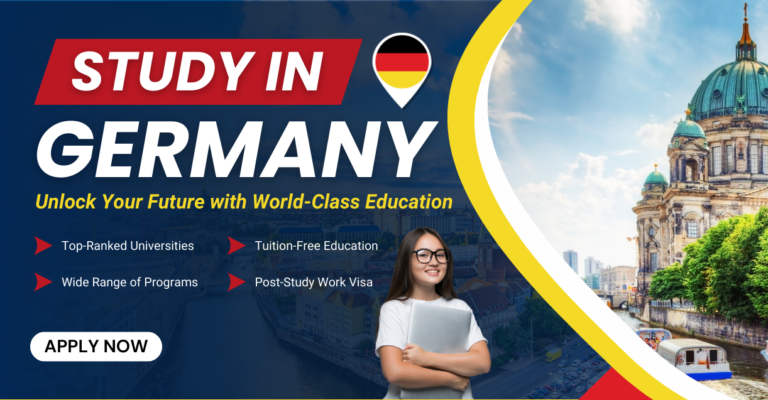
Germany remains one of the most popular study destinations in Europe, especially for international students looking for affordable education, strong career opportunities, and globally respected degrees.
But in 2026, Germany has introduced several important student visa updates that students need to understand before applying.
The biggest changes include:
- Higher blocked account requirements
- Mandatory APS verification for Indian students
- More digital visa systems
- Stronger focus on full-time, genuine study programs
For students planning to study in Germany, the process is still very attractive—but it now requires more preparation and better documentation.
Higher Blocked Account Requirement in 2026
One of the biggest updates is the increase in the minimum blocked account amount.
From 2026, international students must now show at least:
- €11,904 per year
- Around €992 per month
This money must usually be placed in a blocked account before the visa is approved.
The blocked account is designed to prove that students can support themselves during their stay in Germany without relying completely on part-time work.
This amount is mainly meant to cover:
- Rent
- Food
- Transport
- Health insurance
- Daily living expenses
Students should make sure they arrange this amount well before their visa appointment because blocked account processing can sometimes take time.
APS Certificate Is Now Mandatory for Indian Students
Another major update is the mandatory APS certificate requirement for Indian applicants.
Academic Evaluation Centre verification is now an essential step before applying for a German student visa.
This means students must first:
- Get their academic documents verified
- Receive an APS certificate
- Then proceed with the visa application
Germany is now following a “verification first” approach, which means academic records are checked before the visa process even begins.
This step is important because it helps German authorities confirm that:
- Academic documents are genuine
- The student meets university entry requirements
- The application is credible
Students should start APS preparation early because it can take time.
Germany Is Expanding Its Online Visa System
Germany is also making its visa process more digital in 2026.
Many German embassies and consulates are now using:
- Online application systems
- Digital appointment booking
- Electronic document submission portals
This makes the process:
- Faster
- More organized
- Easier to track
However, students still need to attend a visa appointment in person in most cases.
The move toward digital systems does not remove the need for strong documents—it simply makes the process smoother.
Only Full-Time Courses Are Usually Accepted
Germany is becoming stricter about what type of courses qualify for a student visa.
Student visas are generally approved only for:
- Full-time courses
- On-campus programs
- Recognized academic institutions
This means that:
- Weekend-only programs
- Distance-learning courses
- Mostly online or hybrid courses
are usually not accepted for student visa purposes.
Germany wants to make sure students are genuinely moving for full-time education and not using study pathways for other purposes.
Admission From a Recognized University Is Required
Students must first secure admission from a recognized German university or educational institution before applying for a visa.
Without an official admission letter, the student visa application cannot move forward.
Students should also check whether the institution is officially recognized in Germany because this can affect both:
- Visa approval
- Future work opportunities
Language Requirements Remain Important
Germany often requires proof of language ability depending on the course.
In many cases, students may need:
- German language ability around B2 level
- English language ability if the course is taught in English
The exact requirement depends on the university and study program.
Students should carefully check:
- Course language
- Minimum score requirements
- Accepted language tests
Germany Student Visa Processing Time
The standard visa processing time in 2026 is usually:
- 8 to 12 weeks
However, some applications may take longer if:
- Documents are incomplete
- APS verification is delayed
- Additional checks are required
That is why students are strongly advised to apply as early as possible.
Ideally, students should start the visa process at least:
- 3 to 4 months before course start date
Germany Student Visa Fee 2026
The Germany student visa fee remains:
- €75
This is one of the lower visa fees compared to many other major study destinations.
However, students should also budget for:
- APS fee
- Blocked account setup fee
- Health insurance
- Translation and document costs
Work Rights for International Students
Germany continues to offer strong work opportunities for international students.
Students are allowed to work:
- Up to 140 full days per year
- Or 280 half days per year
This gives students the chance to:
- Support themselves financially
- Gain work experience
- Improve language skills
- Build local professional networks
However, work should remain secondary to studies.
Post-Study Work Opportunities in Germany
One of Germany’s biggest advantages is its post-study pathway.
After graduation, international students can apply for a:
- Job-seeker visa
This allows graduates to stay in Germany and search for employment related to their qualifications.
This is especially valuable for students in areas such as:
- Engineering
- IT
- Healthcare
- Automotive
- Finance
- Business
Germany’s strong economy and demand for skilled workers make it an attractive option for long-term career growth.
Final Thoughts
Germany remains one of the best study destinations in 2026 because of its affordable education, strong universities, and excellent job opportunities.
But the visa process is becoming more detailed.
Students who want success should:
- Start early
- Complete APS verification quickly
- Arrange blocked account funds
- Apply only for genuine full-time programs
If students prepare properly, Germany still offers one of the strongest combinations of education quality, affordability, and career growth in Europe.