Germany has introduced an important visa policy change in 2026 that directly affects international students, especially those planning to study from countries like India.
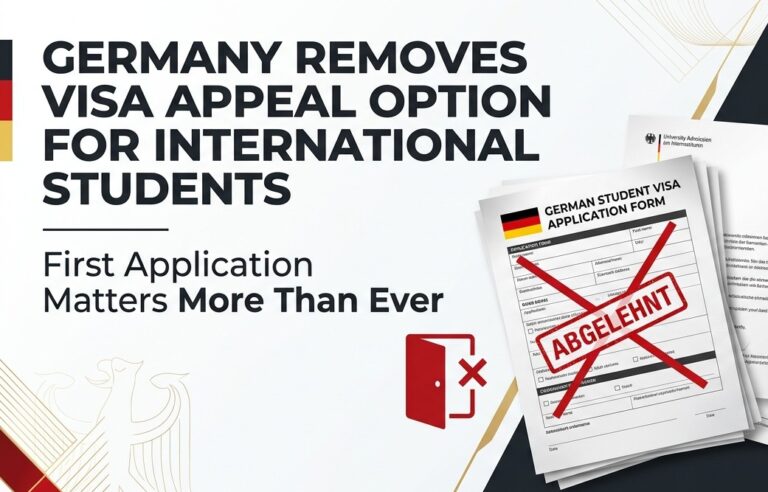
One of the biggest changes is the removal of the “Remonstration” process — an informal visa appeal option that previously allowed students to request reconsideration after a German student visa refusal without starting a completely new application.
Until recently, applicants whose visas were refused could submit additional explanations or supporting documents through this appeal process and ask the embassy to review the decision again. This system gave students a second opportunity to correct minor mistakes or clarify concerns without reapplying from the beginning.
However, this option has now been discontinued.
In practical terms, this means that students whose visas are refused generally have only two choices moving forward:
• Submit a completely new visa application with stronger and corrected documentation
• Pursue a formal legal or court-based process in limited situations
This shift makes the first application far more important than before.
In 2026, German visa authorities are placing stronger emphasis on document accuracy, financial transparency, academic justification, and profile consistency. Even small mistakes in financial proof, blocked account details, APS verification, or academic explanations can now lead to refusal with limited opportunity for informal correction afterward.
For students, this means preparation must begin much earlier and with much greater attention to detail.
Key areas now carrying significant importance include:
✔️ Proper APS certification and verification
✔️ Accurate blocked account funding
✔️ Genuine and well-structured Statement of Purpose (SOP)
✔️ Clear academic progression and course relevance
✔️ Consistent documentation across all stages
At the same time, Germany continues to remain one of the strongest destinations for international education because of its affordable tuition structure, globally respected universities, and strong career opportunities in sectors such as engineering, information technology, healthcare, and manufacturing.
Germany also continues to offer long-term opportunities for skilled graduates through post-study work pathways and residence options for qualified professionals.
But the immigration system is becoming increasingly compliance-focused.
The reality in 2026 is simple:
Students can no longer depend on “fixing” a weak application after refusal. The first submission must now be complete, accurate, and professionally prepared from the beginning.
A strong profile, proper financial planning, and well-organised documentation are becoming essential parts of a successful Germany student visa application.